

19 NOV 2025
ACCIONA and partners present results of the European innovation project ATRIC 4.0
- The goal is to develop new technologies that enable the reuse of waste generated by combustion-based power plants within the construction industry
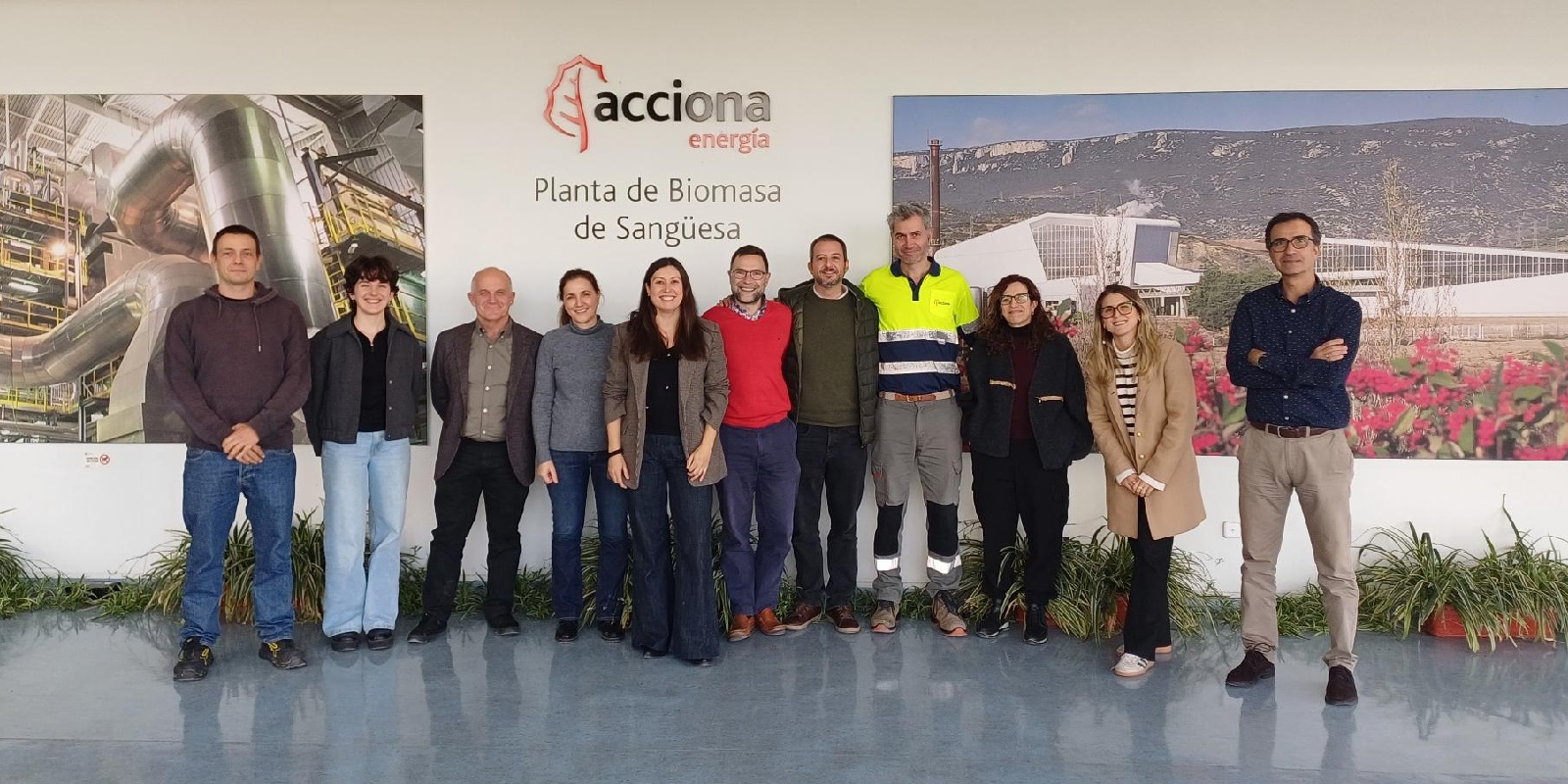
On November 18, ACCIONA and its partners presented the results of the European innovation project ATRIC 4.0 at an event held at the Eduardo Torroja Institute for Construction Science (IETcc) in Madrid.
The main objective of the project has been to develop and validate innovative technologies that promote the use of solid and gaseous waste streams from combustion-based power generation facilities, transforming them into high-value products for use in the construction and industrial sector.
As the project leader, ACCIONA focused its efforts on the research and development of new construction materials derived from secondary raw materials and industrial by-products. Within this framework, the company developed lower-carbon concrete formulations that maintain full technical performance, along with a specific methodology to assess material circularity.
Another key achievement involved geological and geochemical modeling to characterize materials deposited in landfills for potential reuse as construction resources, while also analyzing their long-term performance. This work supports future landfill-mining studies as a means of recovering raw materials and contributes to reducing environmental impact.
The project also established the foundation for an artificial intelligence (AI) model designed to define construction materials based on the quality of secondary raw materials, helping to optimize resource use, improve production efficiency, and increase the incorporation of recycled materials in new projects. In addition, the team evaluated advanced sensor technologies that enable accurate, real-time monitoring of material properties.
INDUSTRIAL MODELS FOR CO2 CAPTURE
In the energy and industrial fields, ACCIONA advanced economic and technological modeling to assess the feasibility and performance of various carbon-capture systems, as well as processes for renewable methane production and the integration of renewable energy with CO₂-capture technologies. The company developed these models using real operational data from its biomass and municipal solid waste (MSW) power plants, allowing the evaluation of CO₂-capture and conversion technologies in real-world industrial environments.
Meanwhile, ACCIONA Energía also contributed to the project by developing innovative operational strategies to optimize processes at its existing plants, aimed at increasing the recovery and reuse of slag as a feedstock for sustainable cement production. This approach helps close the material life cycle and enhance collaboration across the company’s business divisions.
The ATRIC 4.0 project received support from the Spanish Ministry of Science and Innovation under the MISIONES CDTI 2021 program and was co-funded by the European Recovery and Resilience Facility and the European Union’s NextGenerationEU initiative.
