


Sustainable development
Sustainable development is the model of progress that meets the needs of the present without compromising the ability of future generations to meet their own. A concept first defined in 1987 in the Brundtland Report as a response to an economic model growing without limits, and one that is more urgent today than ever: climate change, water scarcity and global inequality are challenges that can only be solved if economic growth, environmental balance and social progress advance together.
WHAT IS SUSTAINABLE DEVELOPMENT?
Sustainable development is a concept that appeared for the first time in 1987 with the publication of the Brundtland Report, warning of the negative environmental consequences of economic growth and globalization, which tried to find possible solutions to the problems caused by industrialization and population growth.
SUSTAINABLE DEVELOPMENT EXPLAINED IN 2 MINUTES
HOW TO ACHIEVE SUSTAINABLE DEVELOPMENT?
Many of the challenges facing humankind, such as climate change, water scarcity, inequality and hunger, can only be resolved at a global level and by promoting sustainable development: a commitment to social progress, environmental balance and economic growth.
As a part of a new sustainable development roadmap, the United Nations approved the 2030 Agenda, which contains the Sustainable Development Goals, a call to action to protect the planet and guarantee the global well-being of people. These common goals require the active involvement of individuals, businesses, administrations and countries around the world.
pillars of sustainability
ENVIRONMENTAL SUSTAINABILITY
ENVIRONMENTAL SUSTAINABILITY
At the environmental level, sustainability prevents nature from being used as an inexhaustible source of resources and ensures its protection and rational use. Aspects such as environmental conservation, investment in renewable energies, saving water, supporting sustainable mobility, and innovation in sustainable construction and architecture, contribute to achieving this environmental sustainability on several fronts.
SOCIAL SUSTAINABILITY
SOCIAL SUSTAINABILITY
At the social level, sustainability can foster the development of people, communities and cultures to help achieve reasonable and fairly-distributed quality of life, healthcare and education across the globe. The fight for gender equality, especially in developing countries, is another aspect which in coming years will form the basis of social sustainability.
ECONOMIC SUSTAINABILITY
ECONOMIC SUSTAINABILITY
Sustainability focusses on equal economic growth, that generates wealth for all, without harming the environment. Investment and an equal distribution of the economic resources will strengthen the other pillars of sustainability for a complete development.
WHAT ARE THE SUSTAINABLE DEVELOPMENT GOALS?
The Sustainable Development Goals, also known as the Global Goals, are a call from the United Nations to all countries around the world to address the great challenges that humanity faces and to ensure that all people have the same opportunities to live a better life without compromising our planet.
SUSTAINABLE DEVELOPMENT GOALS EXPLAINED IN 2 MINUTES
17 goals for a better world
These 17 objectives are interrelated and often the key to one's success will involve the issues most frequently linked to another.
They can be summarised as follows:
Eradicate poverty and hunger, guaranteeing a healthy life
Universalize access to basic services such as water, sanitation and sustainable energy
Support the generation of development opportunities through inclusive education and decent work
Foster innovation and resilient infrastructure, creating communities and cities able to produce and consume sustainably
Reduce inequality in the world, especially that concerning gender
Care for the environment combating climate change and protecting the oceans and land ecosystems
Promote collaboration between different social agents to create an environment of peace and sustainable development.
We contribute to Sustainable Development

WHAT IS ACCIONA DOING IN THE AREA OF SUSTAINABILITY?
At ACCIONA we want to contribute to achieving sustainable development by responding to the planet's great challenges, so that current and future generations may enjoy a better life.
Experience
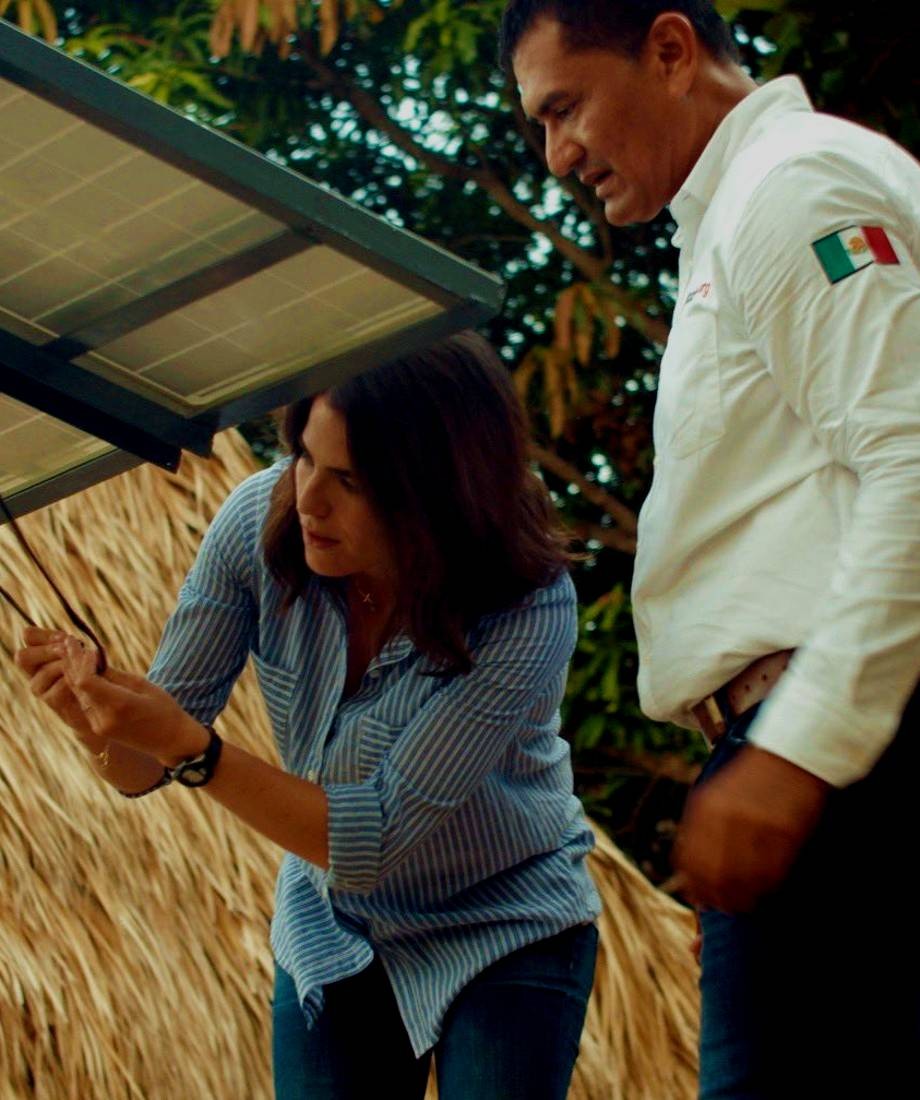
Sustainable regeneration: the art of improving without altering
Below we look at some of the communities that have benefited from the energy, water and sanitation programs of the acciona.org foundation - and can testify that the lives of people are being improved while as far as possible respecting their identities and the surroundings they live in.
FAQS
Sustainable development is the model of progress that meets the needs of the present without compromising the ability of future generations to meet their own. It is built on three interdependent pillars: economic growth, environmental balance and social progress.
WHAT IS SUSTAINABLE DEVELOPMENT?
The Sustainable Development Goals are 17 interrelated global targets approved by the United Nations as part of the 2030 Agenda. They address the world's greatest challenges — from eradicating poverty and hunger to guaranteeing clean energy, climate action and sustainable cities.
WHAT ARE THE SUSTAINABLE DEVELOPMENT GOALS (SDGS)?
The term was first defined in 1987 in the Brundtland Report, published by the UN World Commission on Environment and Development. The report warned of the negative environmental consequences of unchecked economic growth and globalisation, and proposed a new model based on sustainability.
WHEN DID THE CONCEPT OF SUSTAINABLE DEVELOPMENT FIRST APPEAR?
Sustainable development rests on three interconnected dimensions: environmental sustainability (protecting ecosystems and natural resources), social sustainability (equity, inclusion and well-being for all people) and economic sustainability (generating wealth efficiently without depleting the resources future generations will depend on).
WHAT ARE THE THREE PILLARS OF SUSTAINABLE DEVELOPMENT?
The 2030 Agenda is the global action plan adopted by the United Nations in 2015 that sets out the 17 Sustainable Development Goals. It calls for the active involvement of governments, businesses and individuals across the world, with 2030 as the target year for achieving its goals.
WHAT IS THE 2030 AGENDA?
Climate change is one of the defining challenges of sustainable development. Cutting greenhouse gas emissions, transitioning to renewable energy and building climate-resilient infrastructure are essential conditions for a model of development that stays within planetary boundaries.
WHAT IS THE RELATIONSHIP BETWEEN SUSTAINABLE DEVELOPMENT AND CLIMATE CHANGE?
At ACCIONA, we contribute to sustainable development by advancing the United Nations Sustainable Development Goals (SDGs). As a global group specializing in sustainable infrastructure, renewable energy, water, and urban solutions, we develop solutions that address humanity's greatest challenges: the fight against climate change, energy decarbonization, access to water and sanitation, and the building of more resilient cities.
HOW DOES ACCIONA CONTRIBUTE TO SUSTAINABLE DEVELOPMENT?