
GREEN HYDROGEN: THE ENERGY OF THE FUTURE ESSENTIAL FOR DECARBONISATION
Green hydrogen can become an unrivalled tool to replace fossil fuels in those sectors that are more difficult to decarbonise, thus contributing to the fight against climate change.
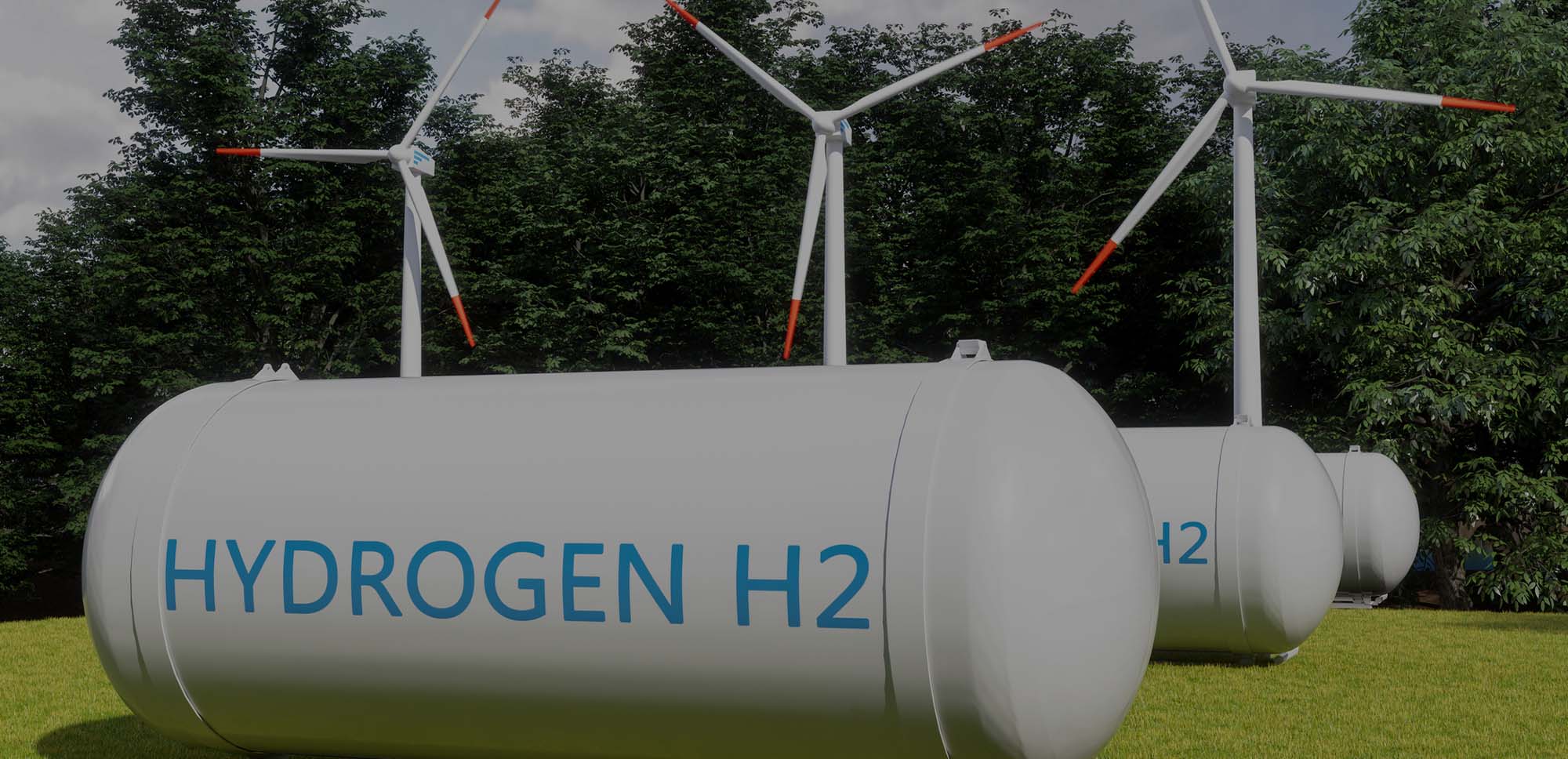
Green Hydrogen
Hydrogen is the most abundant chemical element on the planet; it is present in 75 % of matter. However, we never find it alone, but in the company of other chemical elements such as oxygen forming water or carbon forming organic compounds.
Humanity has long used it as a raw material in the chemical industry or metallurgy and as a fuel, but because it cannot be taken directly from nature in its pure state, it needs to “manufacture” it. And it is the very method that we use to obtain hydrogen that determines whether that hydrogen is a clean, sustainable fuel or not.
When we talk about green hydrogen, we mean hydrogen that has been obtained without generating pollutant emissions, i.e. sustainable hydrogen. A fuel that is already being presented as the key energy vector for achieving global decarbonisation and fulfilling the commitments made for 2050 in the fight against climate change.
Below we will explain why green hydrogen is so important to reduce greenhouse gases, how it is produced and what barriers it will have to overcome to become the fuel of the future.
- What is hydrogen and how do we get it?
- Types of hydrogen as a fuel
- What is green or renewable hydrogen and how does it work?
- What is green hydrogen used for? Uses to fight against climate change
- Advantages of using green hydrogen as a fuel
- Drawbacks of green hydrogen
- Green hydrogen for energy transition, why it’s so important
Green hydrogen explained in 2 minutes

What is hydrogen and how do we get it?
Hydrogen is the simplest chemical element, the first in the periodic table with atomic number 1. It is light, can be stored and does not generate pollutant emissions by itself.
With these characteristics, it is a perfect candidate for a fuel.
However, hydrogen is not a primary energy source but an energy vector, that is, it requires a chemical process to produce it.
You have probably heard that hydrogen is a renewable fuel, but this is not always true. Hydrogen is only renewable if the process used in its extraction is also renewable. Let's look at what forms of hydrogen production exist.
How is hydrogen obtained?
These are different techniques in which a series of chemical reactions to obtain hydrogen are performed. The most widely used technique involves reforming natural gas from oil fields whereby high temperature water vapour is used to separate the carbon from the hydrogen that makes up the natural gas. Two successive reactions produce dihydrogen and carbon dioxide. This is the most widely used of all the methods available today.
1. MOLECULAR TRANSFORMATION
Gasification with water vapour and pure oxygen is performed using coal or biomass. A reactor burns the coal or biomass at very high temperatures. In the combustion, gases are released which give rise to dihydrogen and carbon monoxide.
2. GASIFICATION
This process involves breaking down the water molecule (H2O) into oxygen (O2) and hydrogen (H2) by a direct electrical current that is connected by electrodes to the water. When electrolysis is performed with renewable energy, this is the most sustainable method of production.
3. WATER ELECTROLYSIS:
Types of hydrogen as a fuel
These methods of hydrogen production have resulted in a colour nomenclature that we use to refer to it and to how sustainable its extraction process has been. According to this colour scale, the main hydrogen types are:
Main hydrogen types
Grey hydrogen
Grey hydrogen
Grey hydrogen is obtained by reforming fossil fuels, with natural gas being the most common. It is currently the cheapest hydrogen to produce and the process emits a large amount of CO₂ into the atmosphere. It is also the type of hydrogen that is most commonly used today.
Blue hydrogen
Blue hydrogen
Blue hydrogen is also obtained from fossil fuels, but with techniques capable of capturing and storing the CO₂ emissions produced. It is less polluting than grey hydrogen, but blue hydrogen is only capable of reducing emissions from its production process, not eliminating them completely.
Green hydrogen
Green hydrogen
Also called renewable hydrogen, green hydrogen is obtained by electrolysis of water. The most crucial thing is that this process is powered entirely by renewable energy, so it generates no polluting emissions into the atmosphere and is the cleanest and most sustainable hydrogen.
Grey hydrogen
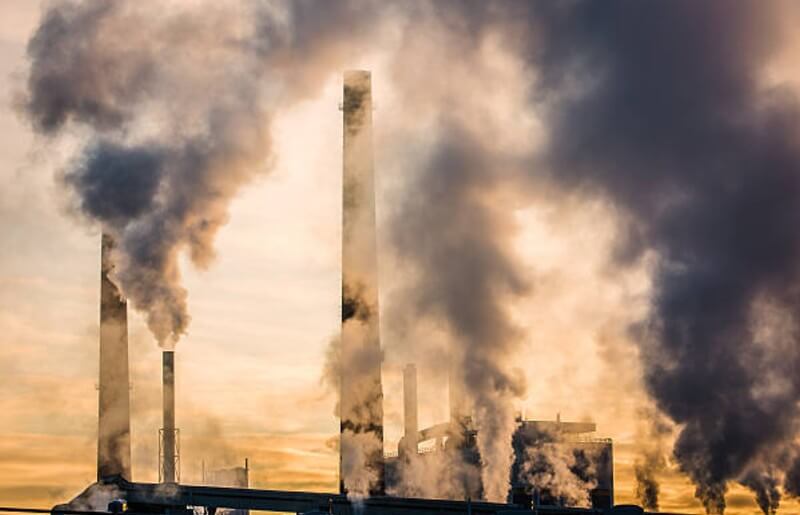
Why is grey hydrogen a problem for the planet?
According to data from the International Energy Agency (IEA), some 70 million tonnes of hydrogen are currently consumed worldwide. The problem is that almost all of this hydrogen is produced from coal or natural gas, that is, it is obtained by the most polluting techniques for the planet. Less than 1 % of the world's production of this hydrogen is based on water electrolysis powered by renewable energies: only 0.1 % of the hydrogen we consume is green.
To give us an idea of what this means, the production of this grey hydrogen emits 830 million tonnes of carbon dioxide per year. This is the annual CO₂ emitted by the economies of Indonesia and the United Kingdom combined. Put another way, generating this hydrogen is equivalent to the pollution created by two countries with a total of more than 300 million inhabitants.
Given this alarming data, it is vital to understand the origin of the hydrogen. Green hydrogen can be an unrivalled tool to replace production models that contribute to climate change and help decarbonise energy consumption that is more resistant to electrification, such as heavy industry or long-haul transport.
What is green or renewable hydrogen and how does it work?
As such, green hydrogen is that obtained through the use of renewable energies in its production, which makes it a clean, sustainable fuel with a zero pollution index that can be key not only as an energy vector, but as a raw material.
Its great value in the fight against climate change lies in its ability to replace fossil fuels in those sectors and uses that until now were more difficult to decarbonise, in addition to its potential as an energy storage system.
How is green hydrogen achieved?
Green hydrogen is achieved through a process of electrolysis powered by renewable energies such as wind or solar. Electrolysis involves using an electrical current to break down the water molecule into oxygen and hydrogen by electrodes.
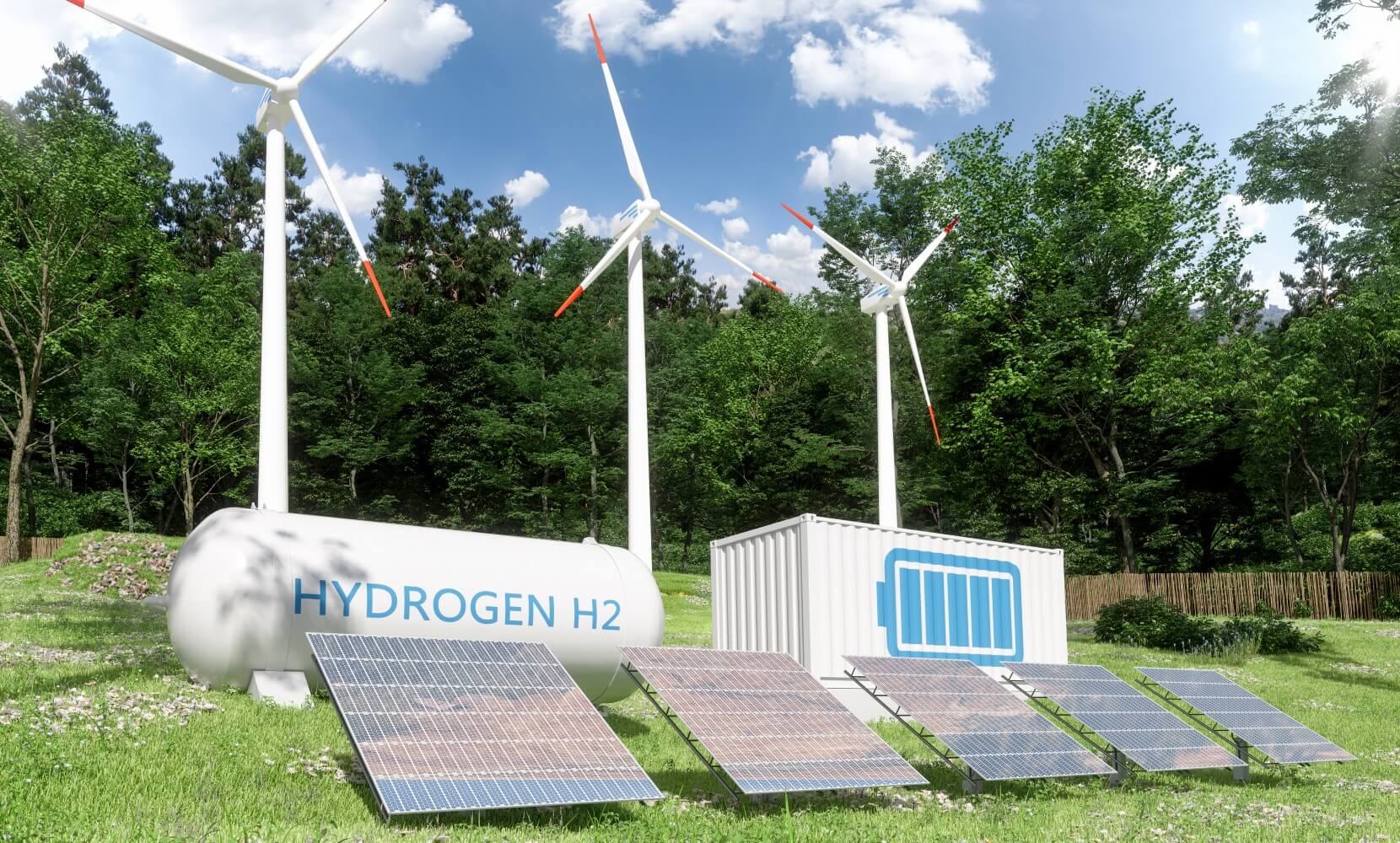
How does green hydrogen work?
When we need to turn it into energy, hydrogen stored in specific tanks is channelled into a fuel cell. There it binds again with oxygen from the air and electricity is obtained. Thus, the only by-product of the process is water, resulting in a clean, sustainable system in which zero CO₂ is emitted to produce energy.
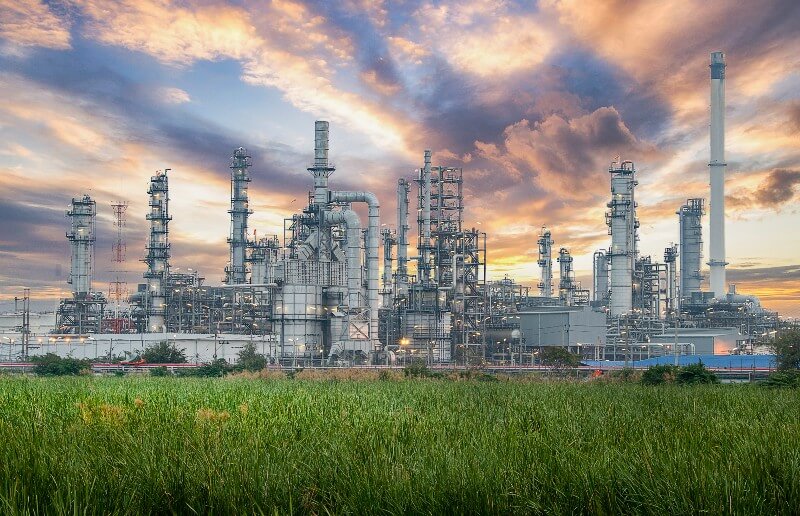
Hydrogen is used as a raw material in the chemical industry to manufacture ammonia and fertilisers, in the petrochemical industry for petroleum refining and in metallurgy to obtain steel. The use of hydrogen in these three industries produces a large amount of carbon dioxide emissions. For example, steel manufacturing accounts for 6 to 7 % of global CO₂ emissions, two to three times the emissions from all global aviation. We could use green hydrogen as a raw material and produce emissions-free steel, which would be a very important step towards the urgent decarbonisation of these industries.
GREEN HYDROGEN IN HEAVY INDUSTRY
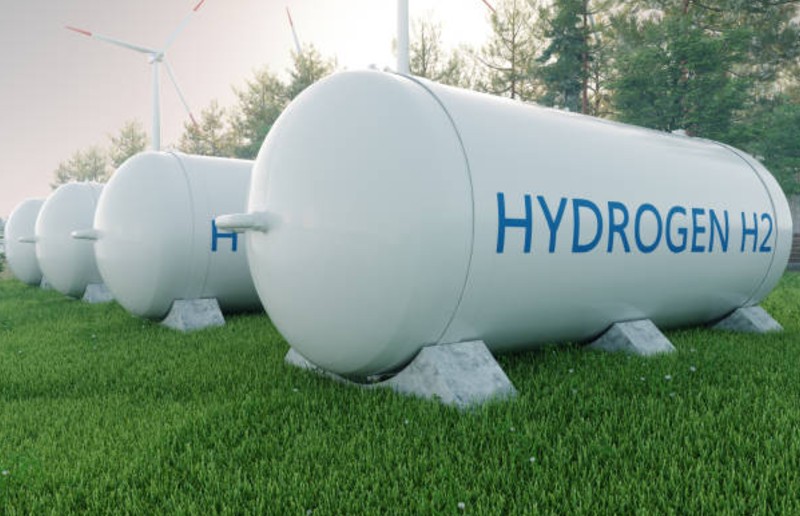
Green hydrogen can serve as an energy storage system thanks to its large volume and long life similar to the way in which we now use strategic oil or natural gas reserves. In so doing, we could supply reserves of renewable hydrogen to support the electricity grid.
GREEN HYDROGEN FOR ENERGY STORAGE

The use of green hydrogen as a fuel will be one of the keys in helping to decarbonise transport, especially long-haul and air transport.
Very cheap but highly polluting fuels are usually used in maritime transport, so green hydrogen offers a decisive alternative for long-haul vessels. In aviation, green hydrogen can be the basis for synthetic fuels that radically reduce emissions from this sector. It will also be essential for other means such as rail or heavy goods transport by road.
GREEN HYDROGEN AS A CLEAN, RENEWABLE FUEL

Green hydrogen is capable of reaching temperatures that are difficult to achieve with other clean processes. That is why its use in electricity and heating for homes is one of the most promising applications of green hydrogen.
GREEN HYDROGEN IN DOMESTIC USE
Benefits of using green hydrogen as a fuel
Green hydrogen will be one of the protagonists in the upcoming energy transition that global economies are obligated to lead to achieve carbon neutrality and combat climate change.
To this end, it will be of vital importance to eliminate emissions in those uses that are currently difficult to electrify, which is where green hydrogen claims its potential due to all of its inherent benefits:
It is a clean energy: The only waste it generates is water.
It is a renewable energy: It uses natural resources that are not exhausted.
It is storable: Green hydrogen can be compressed and stored in ad hoc tanks for a long time.
It is transportable: Because it is a very light element, compressed hydrogen tanks allow easier handling than lithium batteries because they are lighter, which facilitates transport as a result.
Barriers to green hydrogen
Despite all of these advantages, green hydrogen is not yet part of our energy mix because due to various difficulties that research, government policies and private investment have the challenge of overcoming:

- Green hydrogen is more expensive to produce than grey hydrogen. However, the fall in the price of renewable energies has opened a new window of opportunity for its cost to become increasingly competitive. Solar electricity is 10 times cheaper than it was a decade ago and wind energy costs less than half, making it possible for the electricity needed for the electrolysis process to be reduced in price.
- Its implementation requires significant investments. It is said that USD 300 billion will be needed in the next few years globally for infrastructure and research. But, according to a report by BloombergNEF (BNEF), with enough policies to support its development, demand for green hydrogen may increase to 700 million tonnes by 2050, so investment in its development is a cost, but also a huge financial opportunity.
Green hydrogen for the energy transition, why it's so important
There is increasing consensus that green hydrogen could be used in almost every sector that today depends on fossil fuels and is difficult to decarbonise.
That is why it is vital to promote it in order to achieve the climate commitments of the Paris Agreement and the zero-emission targets required by the climate emergency.
Initiatives throughout the hydrogen value chain are already being promoted in Europe, such as the manufacture of more competitive electrolysers, the construction of a transport network and the installation of hydrogeneration for road transport.
According to a report by the International Renewable Energy Agency (IRENA), the cost of hydrogen installations could decrease from 40 % to 80 % in the long term. This, coupled with lower renewable energy prices, suggests that green hydrogen could be profitable from 2030.
GENERATION OF GREEN HYDROGEN AT ACCIONA
ACCIONA works day by day on state-of-the-art energy solutions to advance towards the decarbonisation of the system. That is why it leads the renewable energy sector as the world's largest 100 % clean energy company.
As part of its activity, the company already has a project to generate green hydrogen from photovoltaic energy located on the island of Mallorca (Spain). The plant will generate and distribute more than 300 tonnes a year of H2, which will serve as fuel to public and commercial bus fleets, as well as an auxiliary power supply to ferries and port operations, preventing the emission into the atmosphere of 16,000 tonnes of CO2 per year.
Sources:
Foro Nuclear, Bibing.us, El Economista, Hidrógeno verde: La pieza que falta para la descarbonizacion total, Xataka.
EXPERIENCE

Green hydrogen will it go down in history as a new revolution
ACCIONA Energía produces in Mallorca first industrial ecosystem renewable hydrogen on the european island.
News
7 Oct 2026
The new facility will help to supervise and manage over 1,000 kilometers of power transmission lines...
30 Sept 2026
Masterpieces: A Virtual Experience of the Museo del Prado, created by ACCIONA Cultura in exclusive c...
10 Sept 2026
Recognition in the Valor 1000 ranking reinforces ACCIONA’s leadership in large-scale, highly complex...
4 Sept 2026
The Caclic–Jaén Norte and Ica–Poroma projects will strengthen the electricity transmission grid and ...
2 Sept 2026
The signing ceremony, held in João Pessoa (PB), was attended by Governor Lucas Ribeiro, ACCIONA exec...
11 Aug 2026
ACCIONA Energía will install two new battery energy storage system (BESS) projects in Cuenca and Pal...