

05 MAY 2026
ACCIONA Cultura delivers immersive maritime experience for Museo del Galeón in the Philippines
- At the centre of the museum is a large-scale installation that presents the maritime routes linking Asia, the Americas and Europe.
- It's the company’s first cultural project in the Philippines.
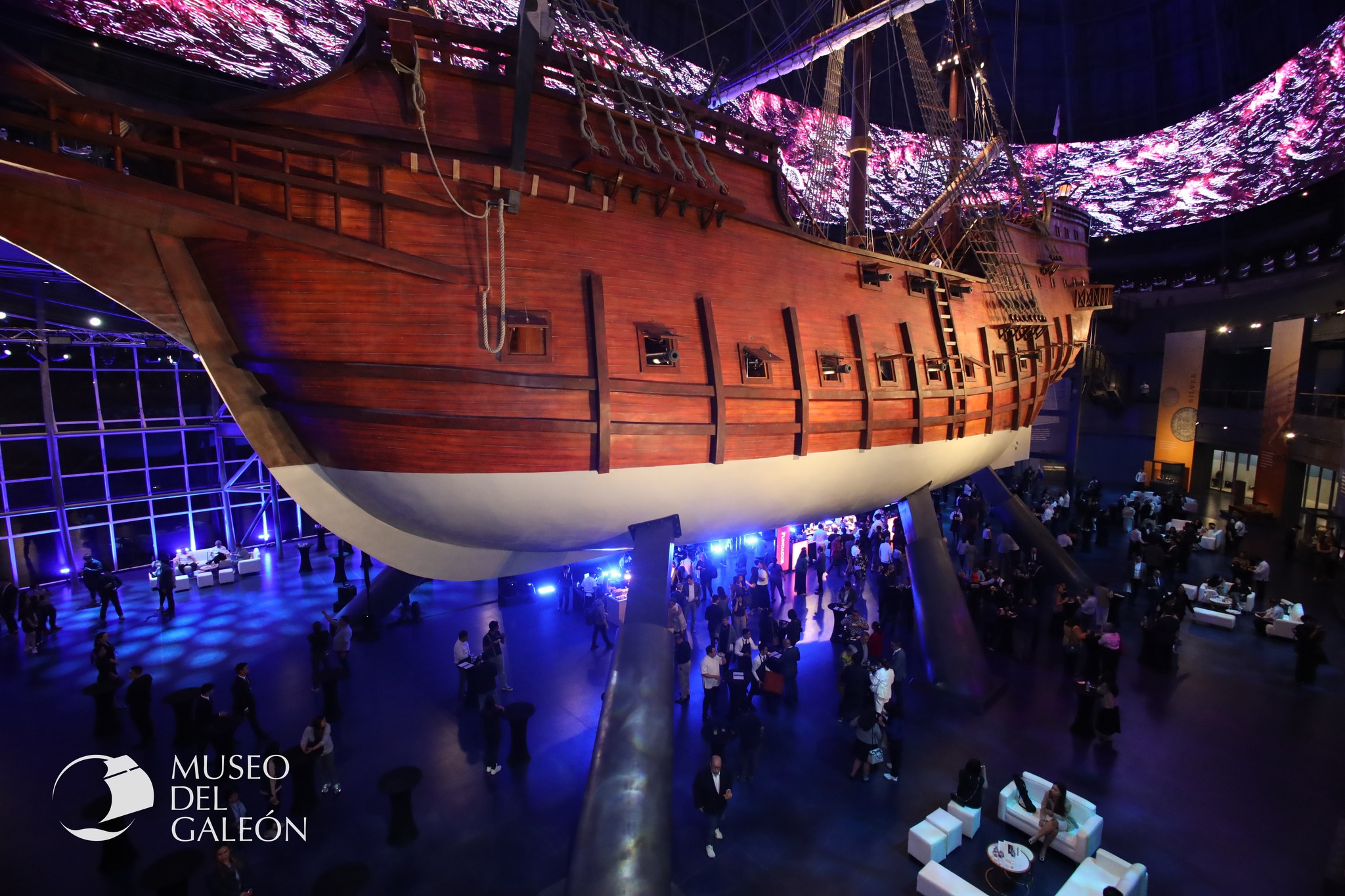
ACCIONA Cultura has designed and produced an immersive audiovisual experience for Museo del Galeón, a new maritime heritage museum which opened to the public on 1 May in Manila, marking the company’s first cultural project in the Philippines.
At the centre of the museum is a large-scale installation that presents the maritime routes linking Asia, the Americas and Europe. Built around a 188-metre curved LED screen suspended above a full-scale reproduction of the Galeón Espíritu Santo, the experience creates a continuous panoramic environment where image, scale and sound convey the exchanges that shaped global connections over several centuries.
ACCIONA Cultura was responsible for the production of the installation, including its audiovisual and spatial design. Developed in collaboration with historians and subject-matter experts, it combines historical research with contemporary media to make maritime history accessible to a broad audience.
ACCIONA Cultura has delivered museum and exhibition projects across Europe, the Middle East, Asia and the Americas, focusing on the integration of content, technology and spatial design.
Its parent company, ACCIONA, has been active in the Philippines since 2016, working across infrastructure, water and renewable energy. The company began operations in the country with the design, construction, operation and maintenance of the Putatan II water treatment plant, which serves around six million people. It has since built the 8.5-kilometre Cebú-Cordova Link Expressway, which includes a 650m cable-stayed bridge, as well as the railway line linking Malolos and Clark International Airport. In recent years, it has expanded its activity through ACCIONA Energía, with the award of wind and solar projects.
In addition, the acciona.org foundation carries out rural electrification initiatives in the country through the Luz en Casa programme, extending access to clean energy to remote communities such as El Nido, in the province of Palawan.
Image: Courtesy of Museo del Galeón