

The first step underground
Tunnel Boring Machines (TBMs): Underground Excavation Technology
They do more than tunnel through the ground. They create the infrastructure that improves mobility, protects the environment and connects communities.
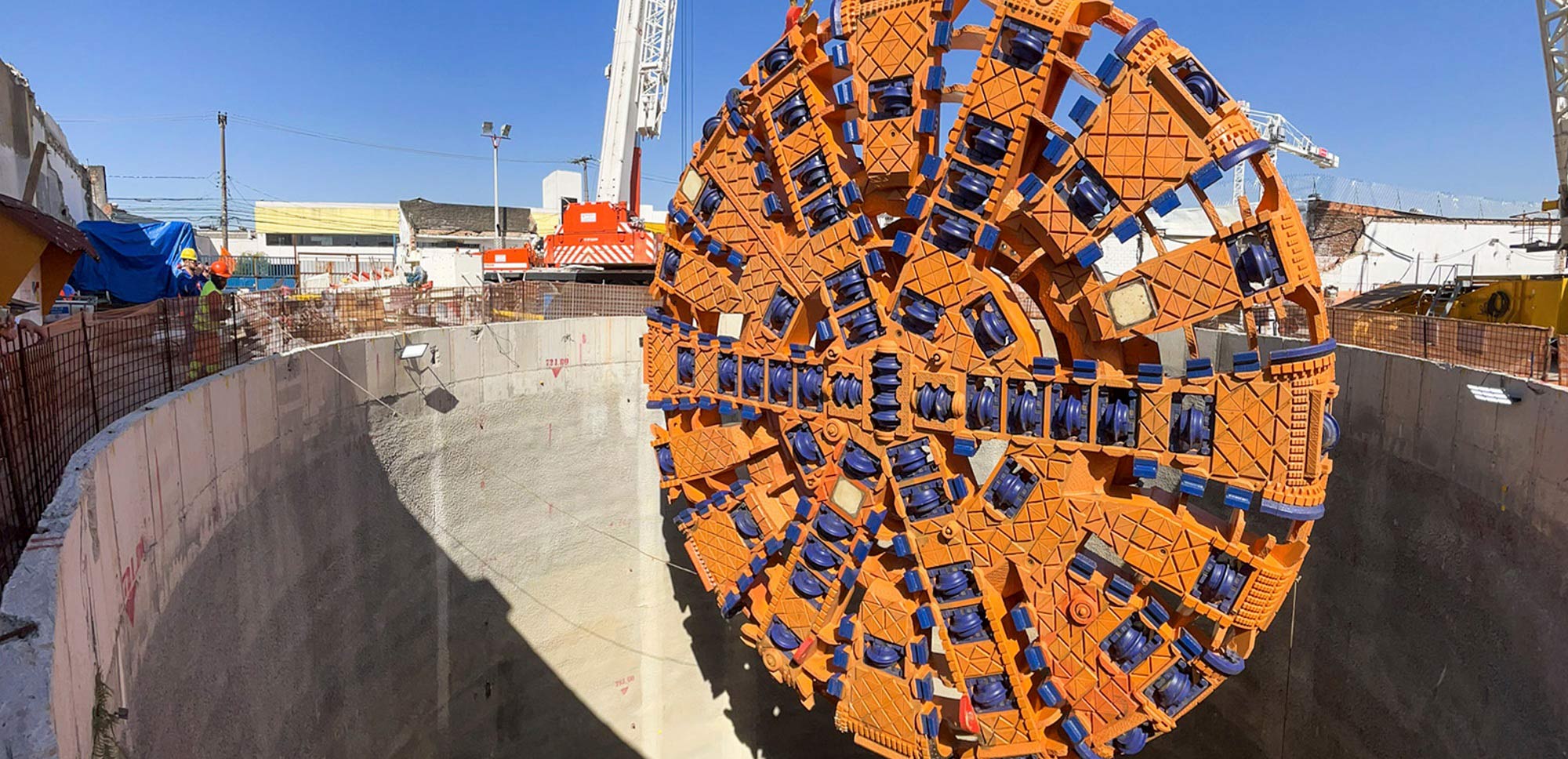
Tunnel Boring Machines (TBM): Underground Excavation Technology
Tunnel boring machines are colossal pieces of engineering that have transformed the construction of underground infrastructure. From the heart of cities to the most remote corners of the planet, their ability to excavate safely, precisely and with minimal environmental impact has permanently changed the way we build. They are far more than machines: they are proof of how human ingenuity can forge a path where once there were only limits.
What is a tunnel boring machine?
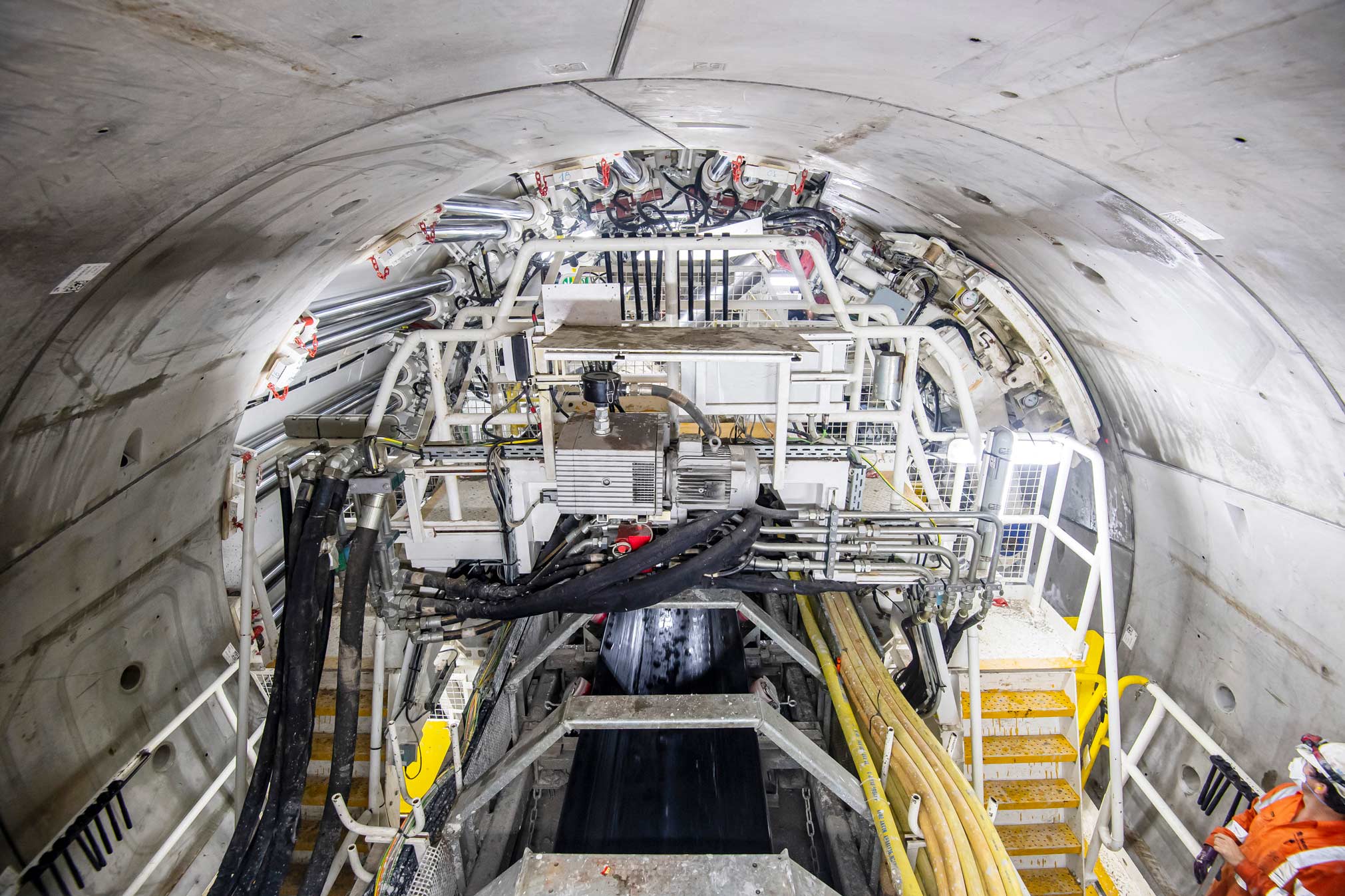
A tunnel boring machine, or TBM (Tunnel Boring Machine), is an advanced piece of engineering designed to excavate tunnels and underground passages through a wide variety of terrain, from hard rock to soft soils. It advances with high precision while simultaneously supporting the ground during excavation, reducing surface impact and ensuring safe working conditions.
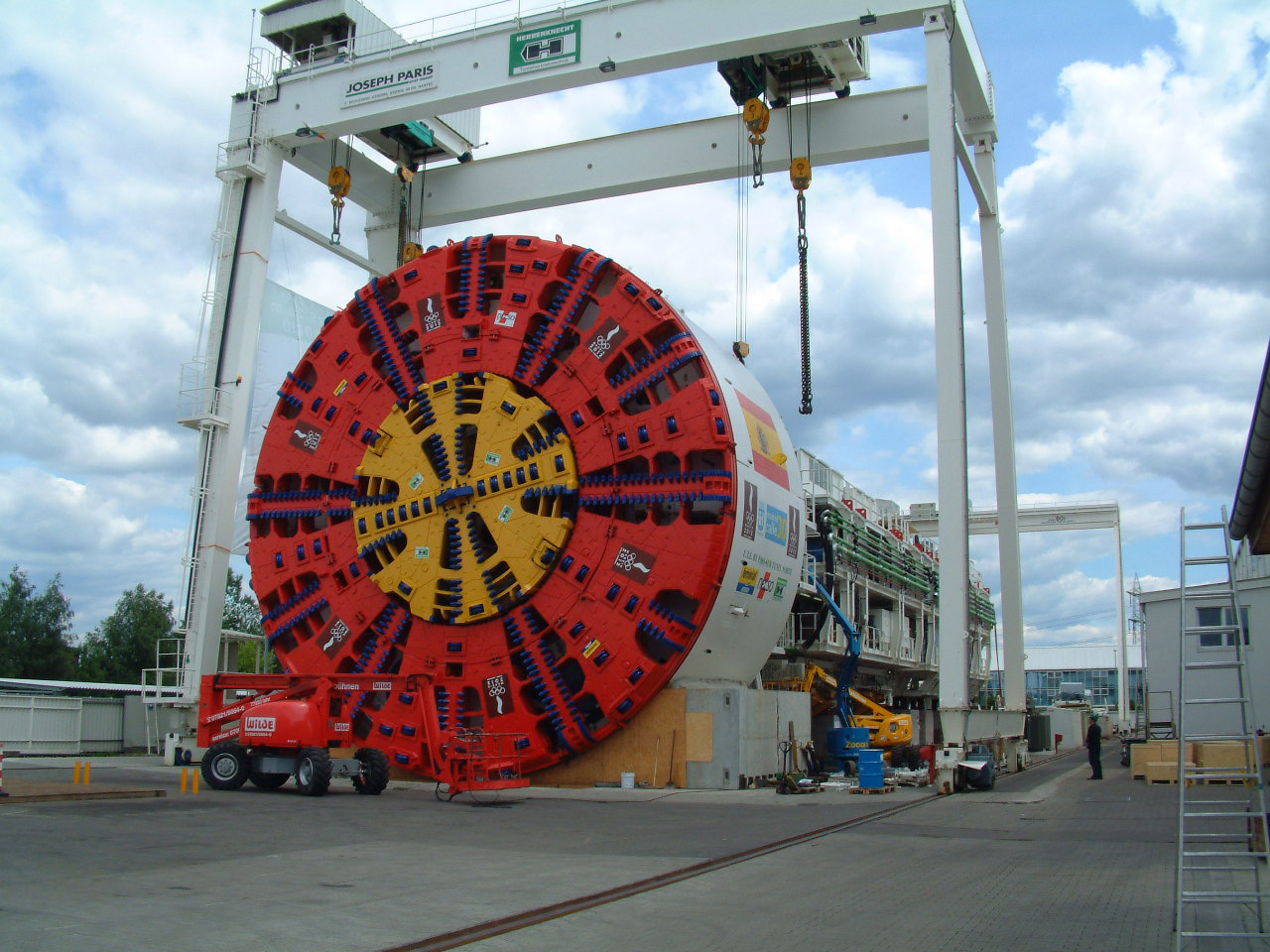
Some of these machines can exceed 100 metres in length, reach diameters of up to 18 metres and weigh as much as 2,800 tonnes — roughly equivalent to nine buses, a five-storey building and fifteen Boeing 747 aircraft combined.
In terms of output, ACCIONA's tunnel boring machines can exceed one thousand metres of excavation per month.
Key figures
+800km
of tunnels designed and built
+400km
excavated using TBMs
34M
data points processed per TBM per day
+800km
of tunnels designed and built
+400km
excavated using TBMs
34M
data points processed per TBM per day
How does a tunnel boring machine work?
It is a complex machine in which every mechanism is designed to work as a unified whole: detecting, drilling, constructing and protecting, metre by metre:
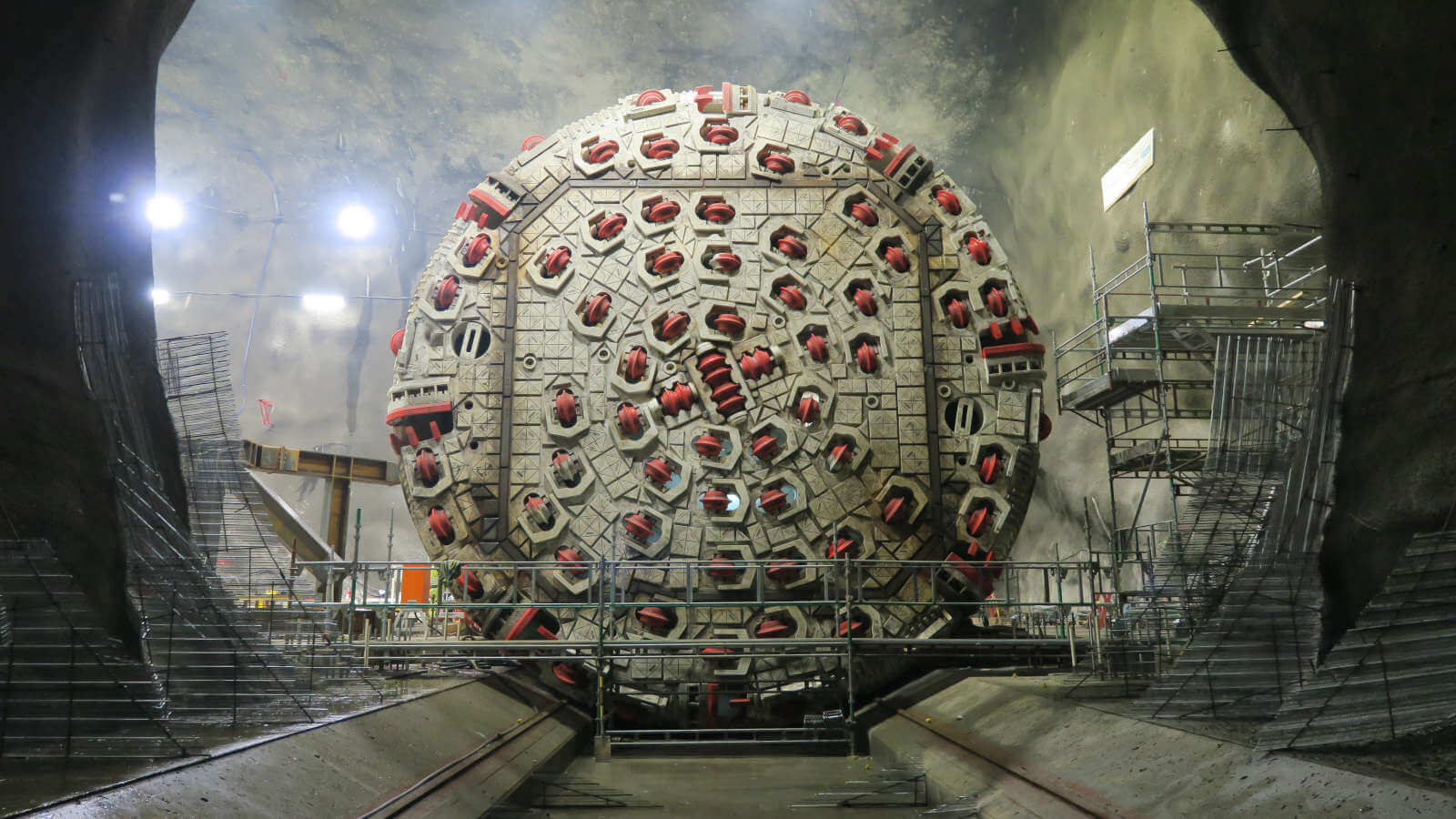
- Cutting wheel: the front component that bores through the ground. Fitted with cutting tools — disc cutters or picks — adapted to the type of rock and soil.
- Shield: a steel cylinder that protects the excavation face and supports the tunnel as the machine advances.
- Drive system: a series of motors installed inside the shield that transmit the necessary power to the main bearing, generating the rotation of the cutting wheel.
- Thrust system: a set of hydraulic jacks that provide the pushing force needed to advance through the ground.
- Segment erector: places the concrete segments known as tunnel liners (or segments) to reinforce the tunnel walls and maintain stability as the TBM drives forward.
- Back-up system: located immediately behind the shield and protected by the installed segments, this section houses all the mechanical, electrical and hydraulic components required for the TBM to function correctly.
- Muck evacuation system: extracts and transports the excavated material — primarily rock and soil — out of the tunnel.
- Ventilation and climate control equipment: ensures safe conditions for machine operators.
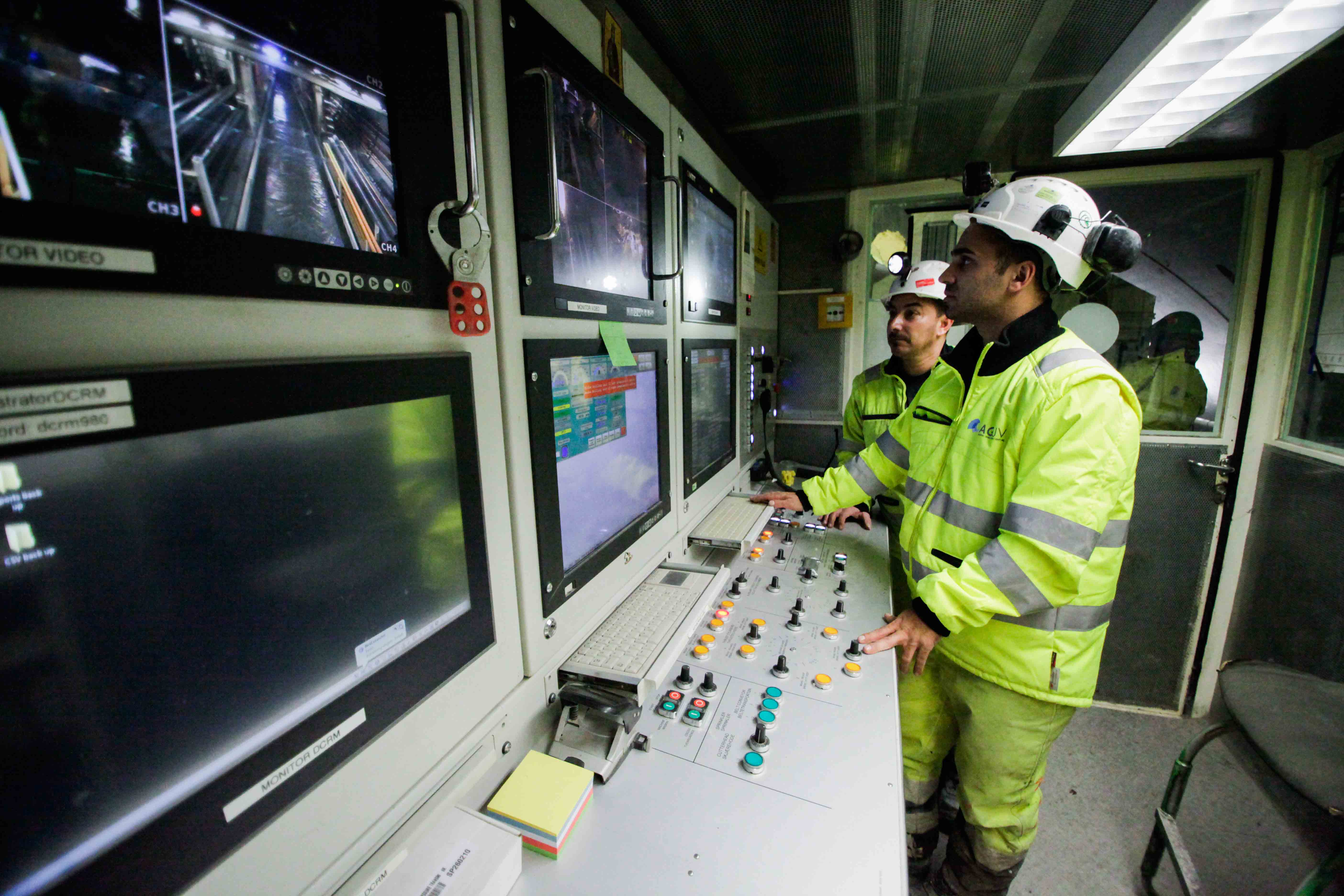
- Control cabin: the operations centre from which all TBM activity is monitored and managed in real time.
Types of tunnel boring machines
No two ground conditions are the same. That is why different types of machine exist, each one specialised to tackle different challenges efficiently:
Main Beam or Gripper TBM
Main Beam or Gripper TBM
designed for excavation in competent, stable rock masses. It uses an open structure fitted with lateral grippers that bear directly against the rock face, generating the reaction force needed to drive the cutting head forward. It delivers high excavation rates and primary support — rock bolts, shotcrete or steel arches — is installed behind the face. Used in favourable geological conditions with low geotechnical risk.
Single Shield TBM
Single Shield TBM
designed for excavation in weaker or heavily fractured ground. The machine advances under the protection of a metal shield and pushes off the segments installed within the shield. A more classical technology, largely superseded today by more versatile systems, it was nonetheless instrumental in numerous landmark tunnel projects in challenging geological conditions.
Double Shield TBM
Double Shield TBM
combines the advantages of a Gripper TBM and a Single Shield TBM. In competent rock it can advance using grippers bearing against the rock mass while simultaneously installing segments behind the machine, maximising excavation rates. When ground conditions deteriorate, it can operate as a single shield, thrusting off the installed segments. This versatility makes it well suited to long tunnels with variable geology.
EPB (Earth Pressure Balance)
EPB (Earth Pressure Balance)
A TBM designed for excavation in consolidated or weakly consolidated soils such as clays, silts or sands. It maintains face stability by balancing ground pressure against the excavated material held in the cutting chamber. This system controls ground deformation and minimises surface settlement, ensuring safe excavation in urban environments or geologically unstable conditions.
Slurry Shield (Hydroshield)
Slurry Shield (Hydroshield)
A closed-face TBM designed for excavation in unstable, water-saturated soils, particularly where high groundwater pressures are present. Face stability is maintained by injecting a pressurised suspension of bentonite or clay-and-water slurry into the cutting chamber, balancing the ground pressure. This slurry forms a barrier that transmits counter-pressure to the face and enables the excavated material to be transported as a suspended slurry. The system effectively controls both ground and water pressure, minimising settlement and ensuring stability in highly permeable conditions.
A brief history of tunnel boring machines
From the 19th century to the present day, their evolution reflects humanity's determination to press forward, even when the way ahead cannot yet be seen:
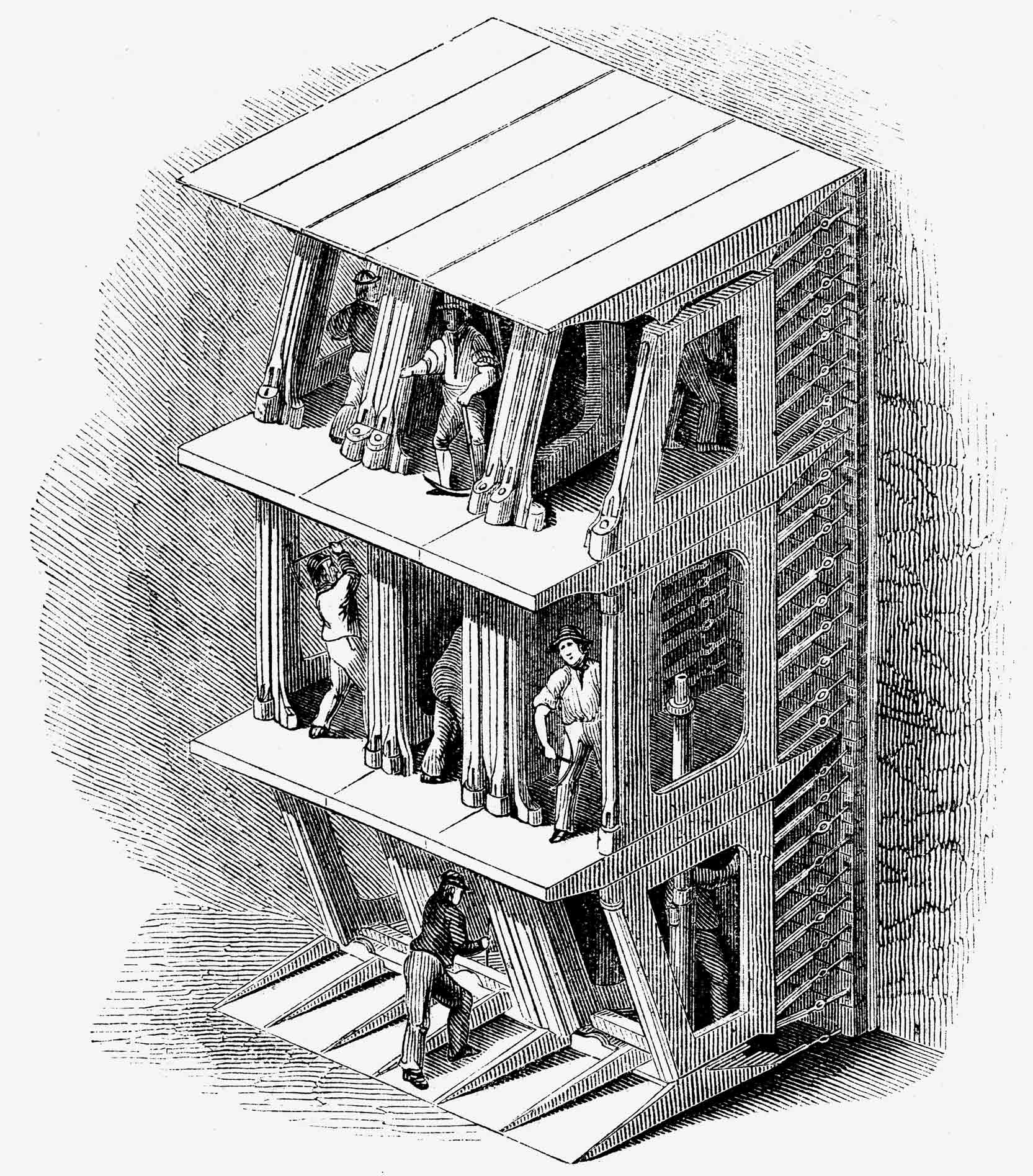
Marc Isambard Brunel designs a mechanical shield to excavate the Thames Tunnel in London. This system is considered the forerunner of the modern tunnel boring machine.
The first TBM with a rotating cutterhead appears at the turn of the century. A technical leap that, between 1950 and 1970, is consolidated with the introduction of hydraulic technologies, mechanical ground support systems and increasingly precise ground control. The TBM moves from promise to the go-to tool for large-scale civil engineering projects.
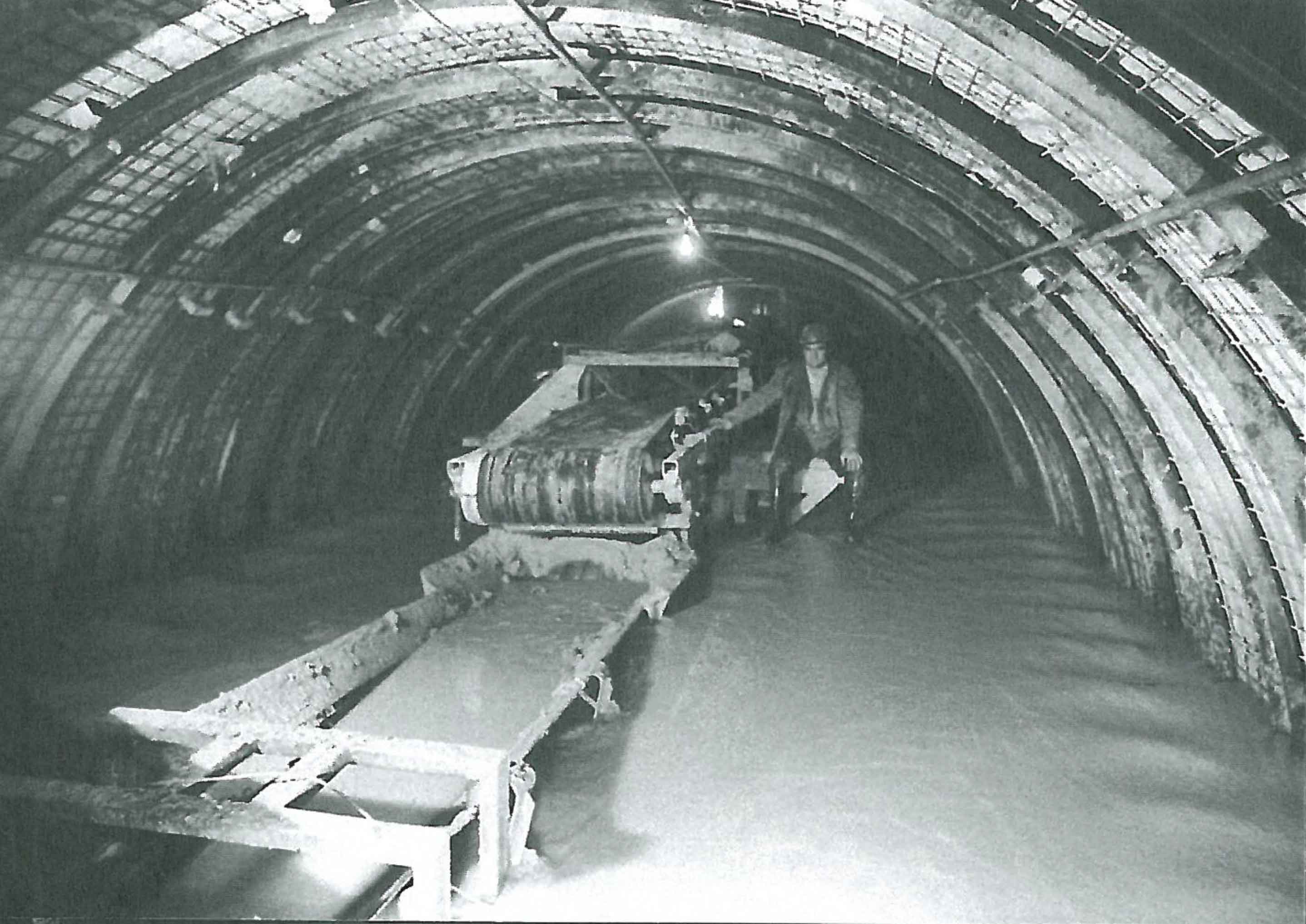
The earth pressure balance TBM —EPB— solves one of the biggest challenges in urban construction: excavating through soft ground and mixed soils while maintaining constant face pressure to prevent collapse and minimise surface disruption. In the 2000s, digital control becomes part of the process: data analysis starts to drive how each machine is operated.
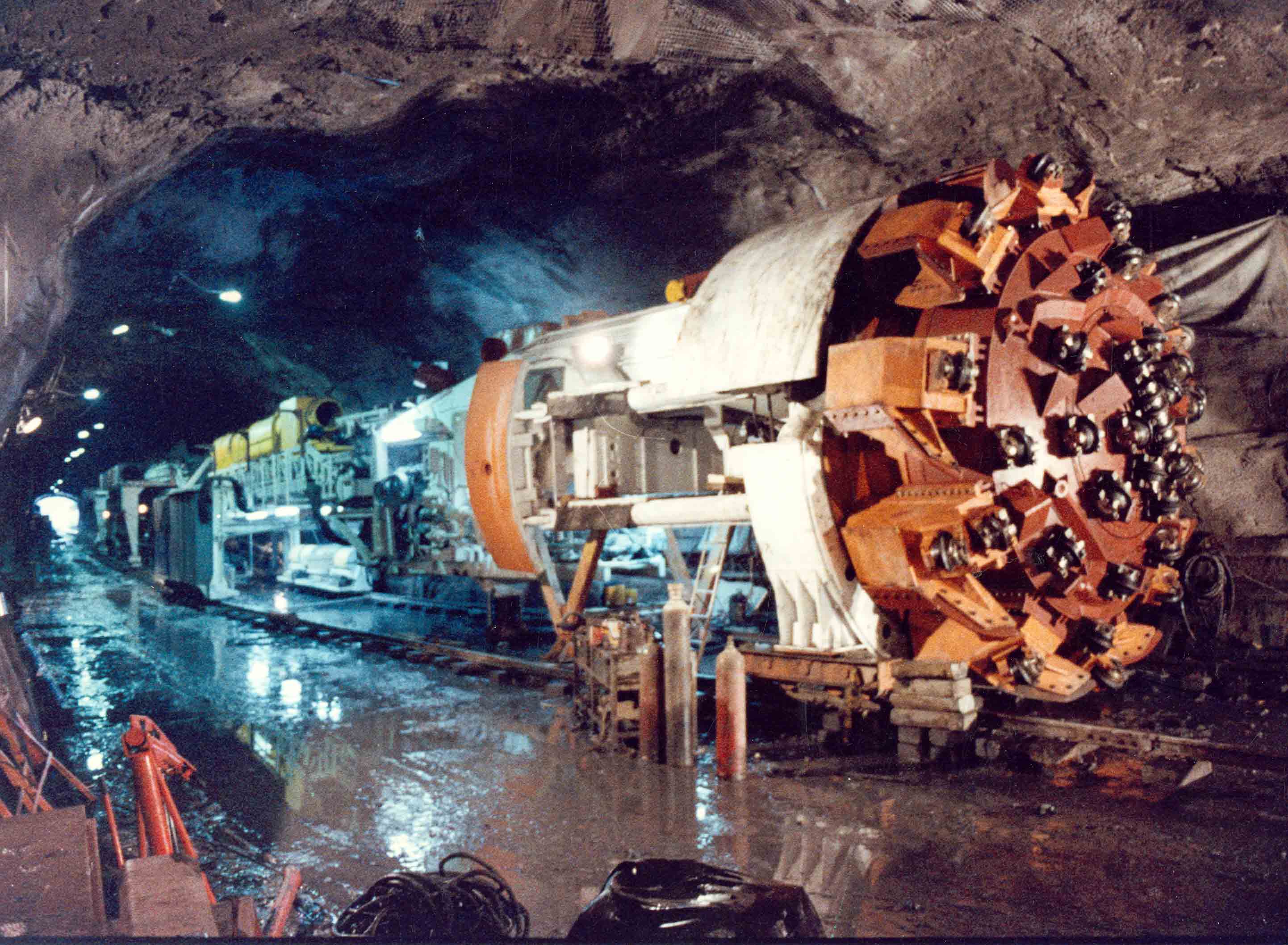
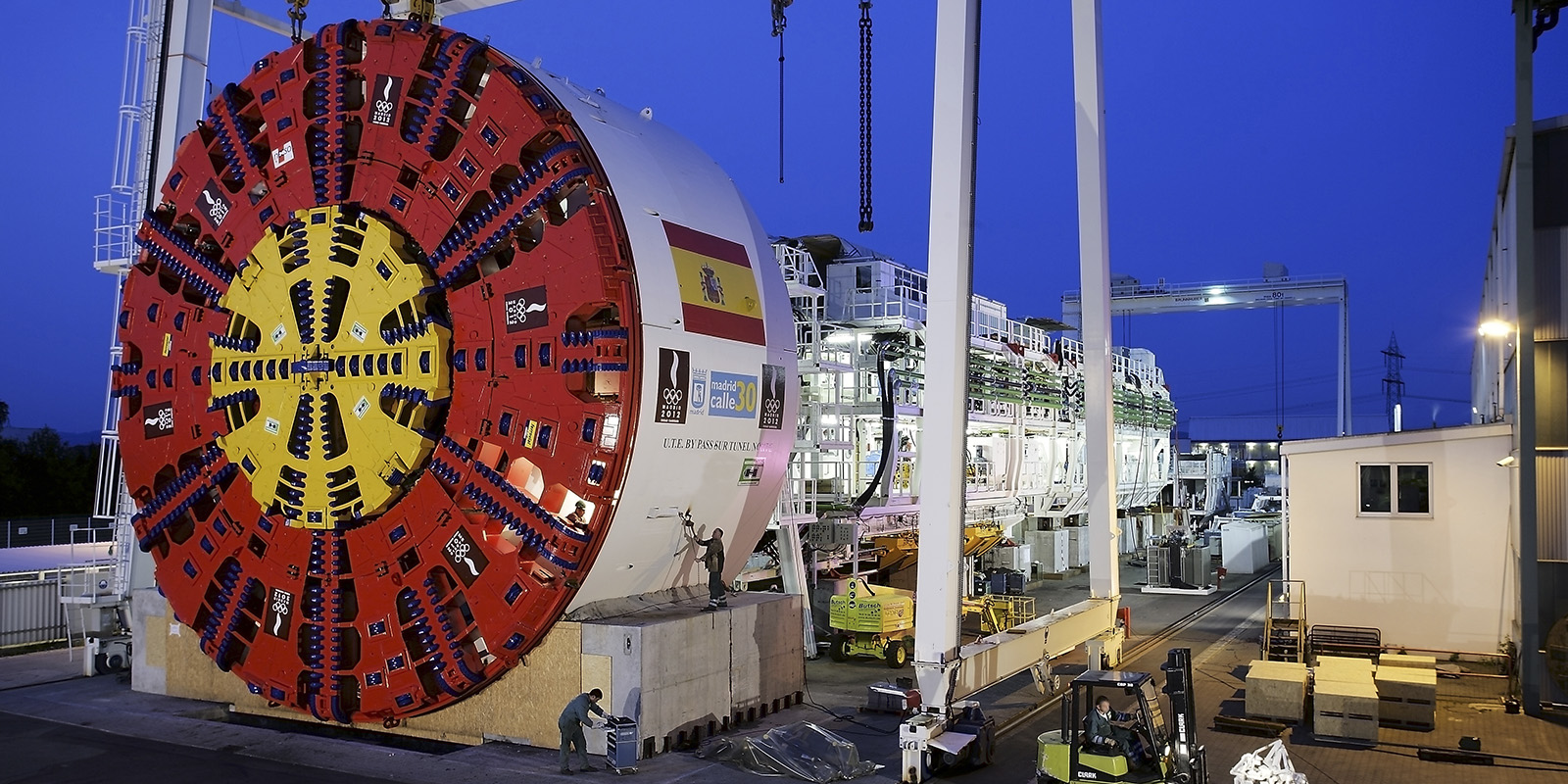
The undergrounding of Madrid's M-30 motorway puts large-diameter TBMs to the test in one of Europe's most demanding urban environments. ACCIONA begins equipping each machine with 200 to 300 sensors, tracking thrust, rotation, energy consumption and early fault detection in real time. Between 2017 and 2022, four TBMs work in parallel on Norway's Follo Line. A step change in how tunnelling projects are planned, coordinated and delivered at scale.
ACCIONA launches its TBM Control Centre, bringing together over 65,000 sensors per machine and 34 million data points tracked every day. Real-time data feeds predictive maintenance, advance modelling and faster, better-informed decisions on site. In 2024, the company begins trialling immersive reality monitoring, giving engineers full visibility of every machine parameter from anywhere in the world, and laying the groundwork for remote TBM operation.
Applications of tunnel boring machines
Rail infrastructure
Tunnel boring machines are essential in the construction of metro lines and high-speed rail, enabling the excavation of long tunnels without disturbing the urban surface.
ACCIONA has deployed this technology in the construction of the São Paulo metro (Brazil), the Follo Line railway tunnels (Norway), and Metro Line 6 in São Paulo — currently the largest infrastructure project under construction in Latin America — which passed the 77% completion mark in 2025, with all 15.3 kilometres of tunnel excavated.
Road tunnels
Tunnel boring machines enable the construction of underground road infrastructure — motorways and urban bypasses — particularly in congested urban environments or mountainous terrain. This solution significantly reduces the visual impact on the landscape, improves connectivity and optimises traffic flow. A prime example is the M-30 underpass in Madrid, one of the most ambitious urban underground engineering projects in Europe, where one of the largest-diameter TBMs in the world at the time was deployed.
Hydraulic works
In water transfer, sewerage and sanitation projects, tunnel boring machines enable the construction of tunnels beneath rivers, protected areas or urban centres without disrupting surface activity. Their application in this type of infrastructure enables more efficient, safer construction with a reduced environmental footprint, even in complex geological conditions.
Energy infrastructure
Tunnel boring machines allow the installation of power lines, gas pipelines and district heating networks in underground environments, ensuring high operational safety and a low environmental impact. In the hydroelectric sector, this technology has also been applied in projects such as the Alto Tâmega hydroelectric plant (Portugal), where ACCIONA constructed tunnels associated with the energy infrastructure, integrating underground energy generation and transmission solutions in an efficient and sustainable way.
Complex urban environments
In densely populated cities with existing infrastructure networks, tunnel boring machines are the ideal solution for minimising surface disruption. A representative example is the Quito metro (Ecuador), where ACCIONA executed the city's first metro line, applying underground excavation technology that enabled efficient construction with minimal urban impact.
ACCIONA's leadership in TBM technology
Tunnelling with minimal impact
ACCIONA builds every tunnel while minimising surface impact, reducing emissions and making the most of available resources.
+60%
drilling precision
achieved through ACCIONA's patented laser guidance system — an innovation that has delivered savings of around 30 MWh in energy consumption.
86,000 tonnes
of recycled granite
used in the construction of the Padornelo Tunnel (Zamora, Spain). Circular economy principles at work on site.
+60countries
where ACCIONA operates
with sustainable standards for the design, construction and operation of transport infrastructure.
Over 100 years of experience
ACCIONA has built over 800 km of tunnels worldwide, adapting each tunnel boring machine to the specific ground conditions of the project through its SPO (Self-Performing Office). The company operates its own Tunnel Boring Machine Control Centre, where it analyses more than 34 million data points per machine per day in real time: cutting force, speed, energy consumption and more. Each TBM is fitted with up to 65,000 sensors and generates around 45 terabytes of data per year, enabling predictive maintenance and advance simulation.
ACCIONA has built over 800 km of tunnels worldwide, adapting each tunnel boring machine to the specific ground conditions of the project through its SPO (Self-Performing Office). The company operates its own Tunnel Boring Machine Control Centre, where it analyses more than 34 million data points per machine per day in real time: cutting force, speed, energy consumption and more. Each TBM is fitted with up to 65,000 sensors and generates around 45 terabytes of data per year, enabling predictive maintenance and advance simulation.
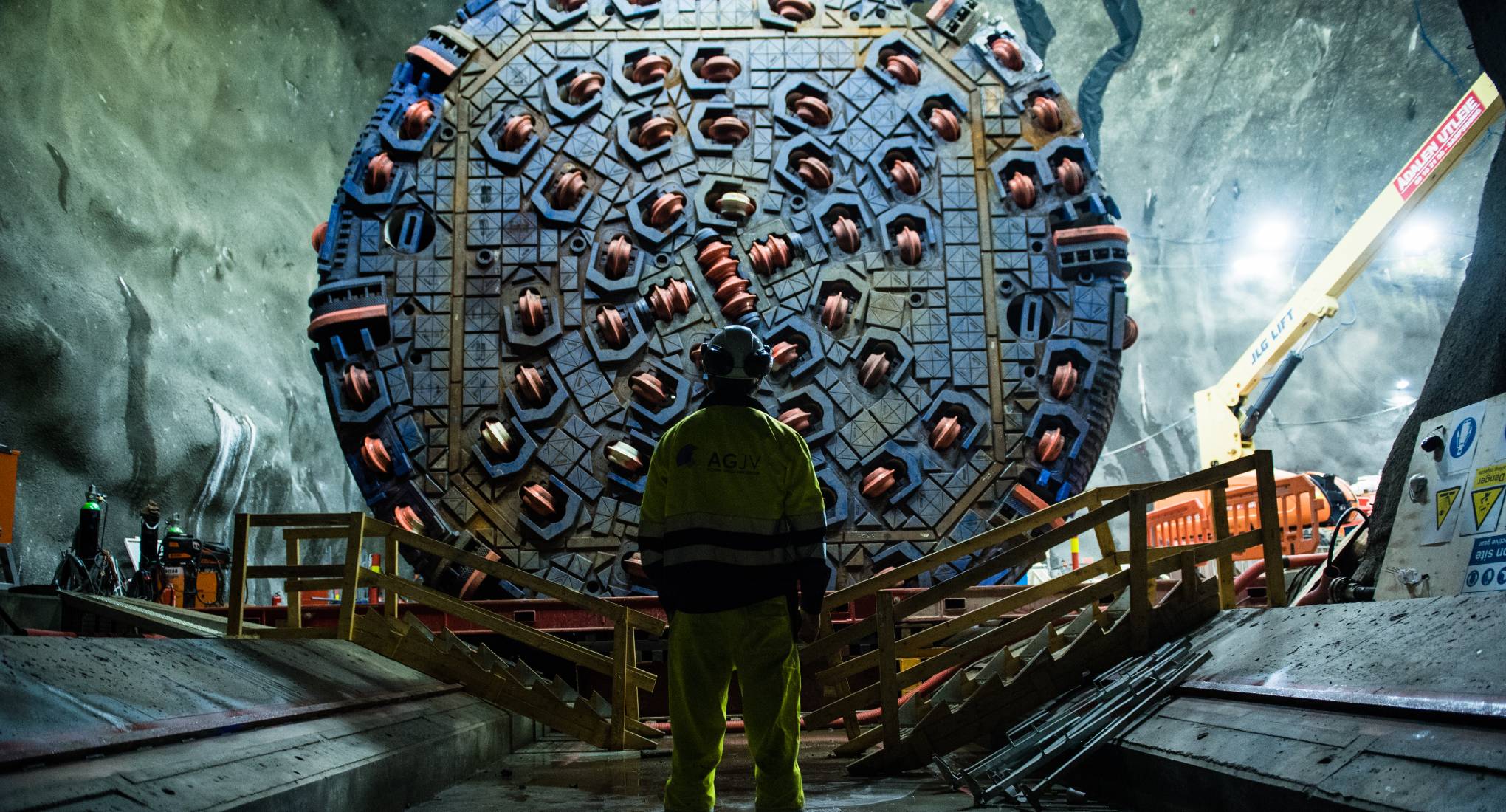
Tunnel Boring Machines Enter Immersive Realities
ACCIONA has begun virtualizing its tunneling operations. This process allows real-time monitoring and optimization of tunnel boring machine operations without needing to be physically present, using technologies like virtual reality headsets.
Frequently asked questions
Excavation time depends primarily on the type of machine, ground geology, tunnel diameter and project logistics. As a general rule, a TBM can advance between 10 and 20 metres per day under average conditions, though peak rates can be significantly higher in favourable circumstances. This typically translates to an output of around 1,000 metres per month. For long tunnels, total excavation can take anywhere from several months to several years, particularly when technical stoppages, ground changes or maintenance operations are factored in.
HOW LONG DOES A TUNNEL BORING MACHINE TAKE TO EXCAVATE ONE KILOMETRE OF TUNNEL?
They are used in the construction of metro systems, railway lines, road tunnels, hydraulic infrastructure, energy projects and complex urban works where surface impact must be kept to a minimum.
WHAT TYPES OF PROJECT CAN TUNNEL BORING MACHINES BE USED FOR?
Worker safety inside a tunnel boring machine is built on an integrated system combining physical protection, environmental control and continuous monitoring. Excavation takes place inside a closed shield that isolates the unstable ground face from the working area. Work zones are controlled through ventilation, climate control and, in some cases, pressurisation systems, ensuring safe and breathable conditions at all times. Sensors distributed throughout the machine continuously monitor parameters such as pressure, gas levels, temperature and ground behaviour in real time. This data is managed from a control centre that enables early risk detection and automated safety responses. ACCIONA also enforces strict safety protocols and ongoing training for all operators.
HOW IS THE SAFETY OF OPERATORS ENSURED DURING EXCAVATION?
Their use significantly reduces surface disruption, cuts waste generation and optimises resource consumption, contributing to more efficient and sustainable excavation in urban environments.
WHAT IS THE ENVIRONMENTAL IMPACT OF TUNNEL BORING MACHINES?
Dimensions vary according to machine type and project requirements, but some TBMs can exceed 100 metres in length and reach excavation diameters of up to 18 metres, adapting to the specific conditions and needs of each project.
WHAT IS THE MAXIMUM SIZE OF A TUNNEL BORING MACHINE?
Recent innovations in TBMs are transforming underground engineering through automation and sustainability. Particularly notable is the integration of advanced sensors and artificial intelligence (AI) systems that enable real-time data analysis, processing more than 34 million data points per machine per day. These advances, combined with predictive and automation systems, optimise the excavation process and enable early detection of potential issues — such as tool wear or subsidence risk. ACCIONA is already testing immersive reality systems that provide access to all machine data in a virtual environment.
WHAT TECHNOLOGICAL ADVANCES ARE BEING INCORPORATED INTO TUNNEL BORING MACHINES?